
Dual Prejudices
Dual Prejudices
by Carla Koss
When noted psychiatrist and physician Leo Kanner, MD, began formulating the concept of infantile autism, his study was based on the children who were brought to him at The Johns Hopkins Hospital. In the 1940s, these children came from middle- to upper-class white families, “and ever since, autism has been treated largely as a white disease. Even when autism began to reach wider public awareness and understanding in the 1980s — especially after the movie Rainman — many Americans continued to assume that the condition only affected white people.” [1}
As a result, “[a]utistic individuals who are also people of color… are historically underrepresented in research,” wrote lead researcher Melissa P. Maye, PhD, and her team in their 2021 research paper, Biases, barriers, and possible solutions. “Lack of representation in autism research has contributed to health and healthcare disparities. Reducing these disparities will require culturally competent research that is relevant to under-resourced communities.” [2]
Maye and her team share several examples of how biases and barriers impact Black families, including earlier autism diagnoses for white children than for Black because of a diagnostic assessment provider’s racial prejudice. [2]
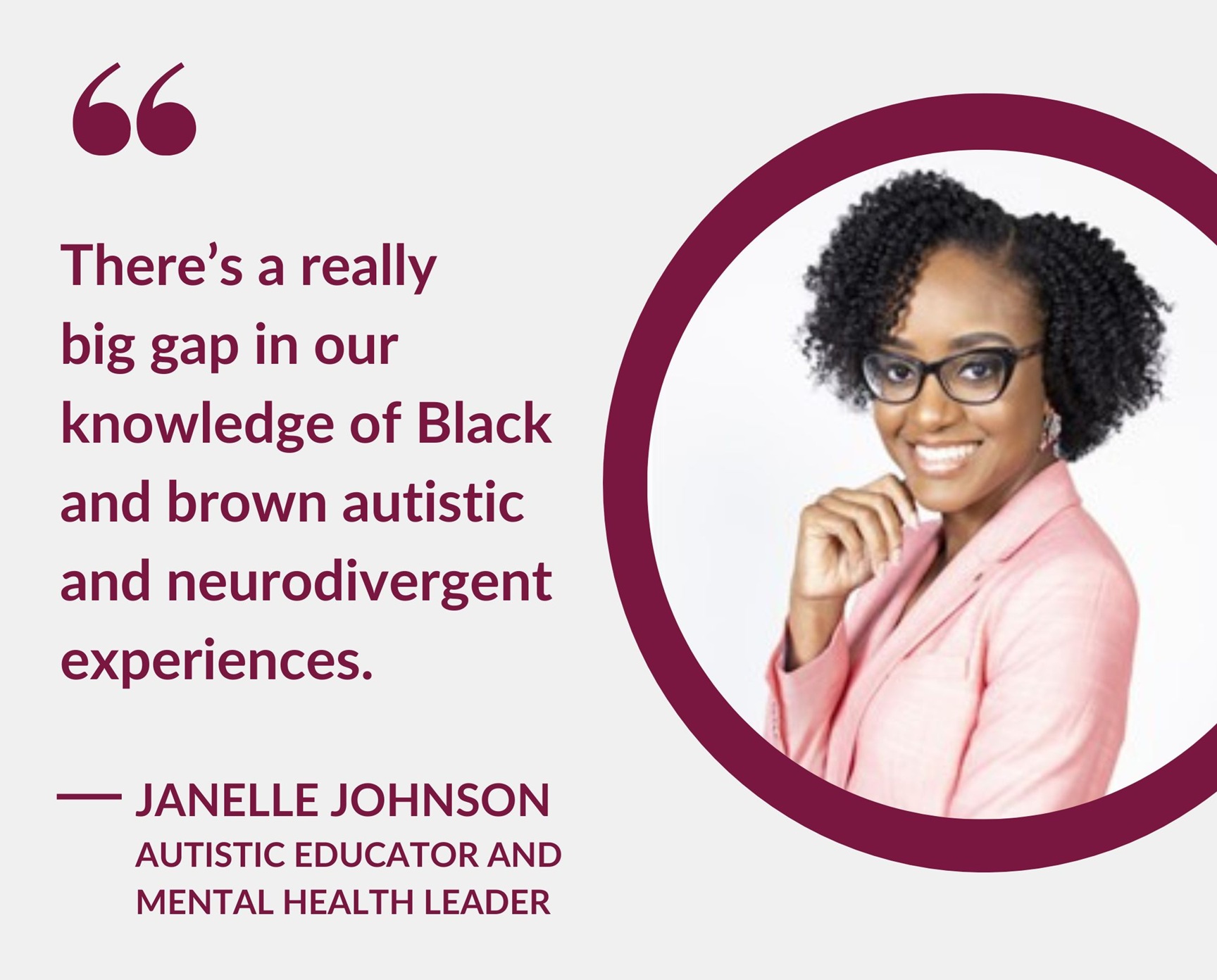
Photo courtesy of caroylnkiel.com.
Acknowledging racial prejudice and cultural differences
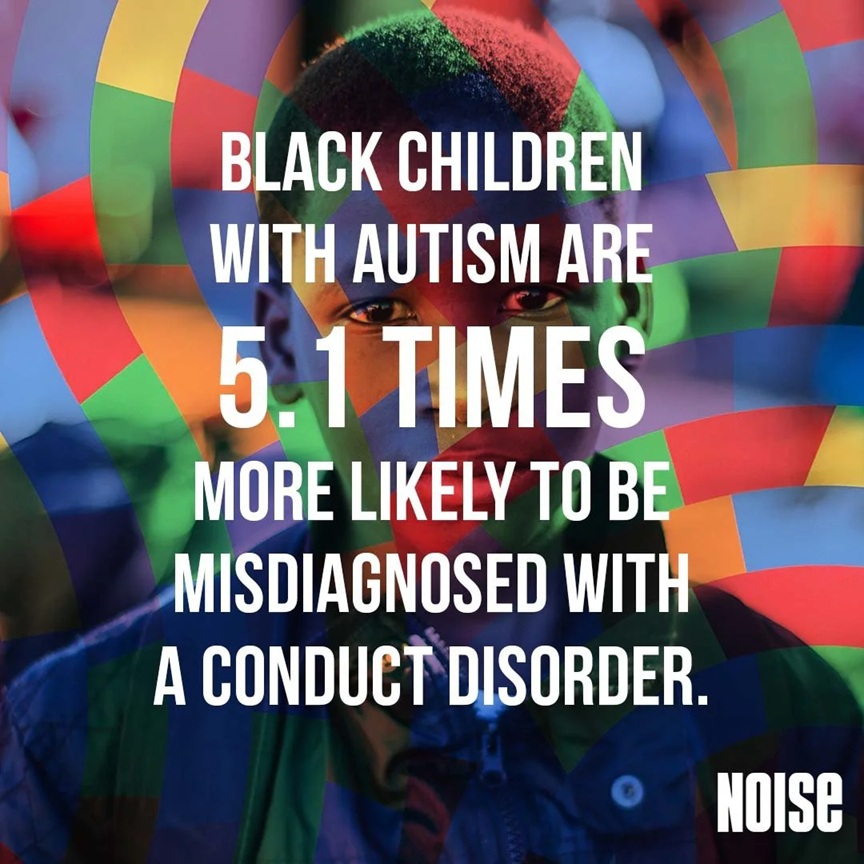
Instead of an autism diagnosis, a Black child may be labeled as a behavioral problem. “Black children are more likely to be misdiagnosed with behavioral disorders, like ADHD, or even labeled as ‘defiant,’” noted Howard University school psychologist and assistant professor, Shanter H. Alexander, PhD, EdS, NCSP, in an article describing her mission. [3]
Black families may also face the stigma of an autism diagnosis in their own community, added Alexander, who grew up on St. Lucia with an autistic family member. “I witnessed firsthand what it was like for a family with a [neurodivergent] child to walk through the experience—the feelings of shame, the feelings of guilt. ‘Was it my fault as a parent?’ ‘Was it something related to the family?’ ‘The lack of resources?’” [3,4]
To address issues like these, researchers have begun listening to the parents of children on the spectrum and recording their recommendations for how to address the problem.

|
Autism Delaware acknowledges that people of other cultures who have children on the spectrum may experience the dual prejudices covered in this article observing Black History Month. Three examples of those who may also be negatively impacted by dual prejudices are the Hispanic–Latino, Haitian–Creole, and Vietnamese communities. If any of the issues in this article resonate in you, please consider the suggested remedies, but note that any mentioned remedy is not an endorsement by Autism Delaware. You should investigate any suggested remedy to be sure that it’s appropriate for you and your autistic child. If you need help, please call (302) 224-6020, ext. 219, and make an appointment with a highly qualified family support staff member. |
Do any of these comments sound familiar to you?
- The healthcare professionals were “passing off behaviors that Black children display as ‘a Black thing.’” [5]
- They “expect Black kids to naturally be wilder and have behavior problems.” [5]
- “I believe, if I was a white parent when I brought my concerns to the pediatrician, he would have sent my son for testing sooner.” [5]
Each comment was made by a Black family that had gone to a healthcare professional to find answers about their child’s behavior and who were members of Simon Powering Autism Research. Called SPARK, for short, the organization’s 21,000 members include individuals on the spectrum, their families, and autism researchers. Families were chosen to take part in a SPARK researchers’ study at the Vanderbilt University Medical Center and Meharry Medical College (Vanderbilt-Meharry) in Tennessee or a separate study at the University of Arkansas. The researchers’ goal was to learn what Black families may experience in a healthcare setting, to quantify the disparities compared to the experience of white families, and to then record the Black families’ suggestions for a better outcome. [5,6]
In addition to the three comments above, the Black families in the SPARK studies also wondered about cultural differences during a child’s autism assessment: “We were in doubt about whether or not [our son] truly had autism for a while because we felt the activities used were not ones he engaged in at home and hence [he] may have been unfairly disadvantaged.” [5]
Further comments pointed to how the parents’ denial and fear postponed beneficial supports and services, such as this comment from a mother who believed she could “fix” her son: “I took him back to that same clinic a year later, and I wanted them to test him again, and for them to tell me he was all better. And they tested him again, and they told me that he had made some progress, but he still had autism.” [5]
A combination of racial prejudice and cultural differences also arose: “Some parents were concerned about the stigma their child would face as a member of two minority groups—Black and autistic.” [5]
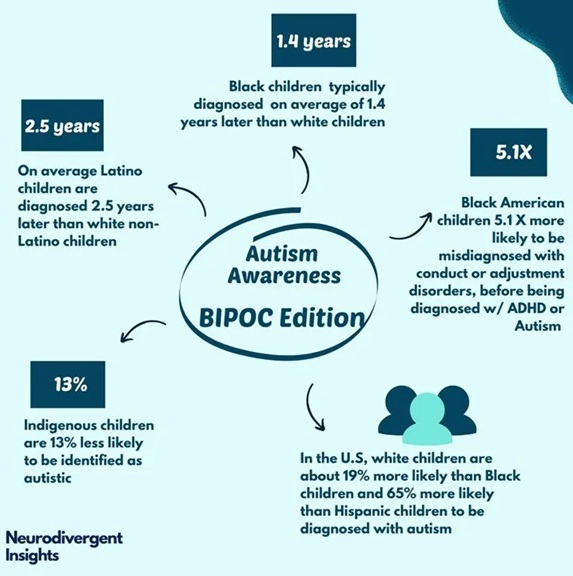
Photo courtesy of defendernetwork.com.
Addressing racial prejudice and cultural differences
“Representation matters,” continued Howard University professor Shanta Alexander. “We trust those who look like us and understand our stories. We want to feel safe.” With more inclusive screening, added Alexander, autism is now being diagnosed at a higher rate, but as previously noted, “the intersection of race, disability, and cultural pride can create significant barriers to care.” [3]
Last February, the OARacle Newsletter addressed racial prejudice and cultural differences and offered this advice: “Parents and caregivers, educators, and medical, clinical, and therapeutic practitioners must deploy specific strategies that take into consideration the unique challenges faced by Black autistic children and youth as they navigate spaces that were not designed with them in mind.” [7]
Examples of specific strategies included parental education plus anti-prejudice clinical training, working relationships with agencies that can address any gaps in service, and opportunities for children to learn how to talk about their feelings, to participate in a variety of settings, and to self advocate. [7]
Another way a Black family can prevent prejudice and cultural differences: Look for a culturally sensitive therapist. A therapist who is culturally sensitive will be able “to first recognize and understand one’s own culture and how it influences one’s relationship with a client, then understand and respond to a culture that is different from one’s own.” [8}
Any family looking for a new therapist or healthcare provider should, first, interview the individual to help decide if the therapist is a good fit. These two websites may help start the process: https://blackpsychiatrydirectory.com/ and https://www.psychologytoday.com/us/psychiatrists?category=african-american.
Acknowledging the lack of information
“A lack of autism information also posed a barrier,” observed the researchers in the SPARK Vanderbilt-Meharry study. “One in 10 parents said that they didn’t pursue an autism diagnosis because they did not know about autism.” [5]
Plus, the researchers in the SPARK University of Arkansas study learned that misinformation about autism’s cause (such as bad parenting and vaccines) also undermined a parent’s willingness to get a child tested as did the parent’s own denial and fear. [5]
“In our study,” pointed out Harlee Onovbiona, PhD, in a 2025 interview for SPARK, “caregivers alluded to not having as much access to resources as their white counterparts and being treated with less dignity and respect throughout the process by professionals who were supposed to be supporting them.” [5]
Addressing the lack of information
The parents in SPARK’s study suggested the following changes to mitigate the lack of autism information:
- more autism training for parents and for healthcare and service providers as well as training in “humility, compassion, and understanding.” [5]
- more family support following an autism diagnosis plus ongoing support groups
- more Black autism professionals
- autism evaluations done in a timely manner
- seminars and programs that educate people on the signs of autism and the steps to take if a parent thinks a child may have autism
- more interventions, such as applied behavior analysis (ABA), that are affordable and accessible [5]
Acknowledging the prejudice in language
In 1956, Benjamin Lee Whorf analyzed his linguistics research by noting that “…each language is not merely a reproducing instrument for voicing ideas but rather is itself the shaper of ideas, the program and guide for the individual’s mental activity.” [9]
In other words, our language influences how we perceive our world and can give voice to our prejudice.
While the language of racial prejudice is all too familiar and obvious, the language of autism prejudice—besides the R-word—is not: “If you're someone who makes a point to be conscientious in your communication,” explains the verywellmind.com article entitled Types of Ableist Language and What to Say Instead, “it may be shocking to realize that you’re unknowingly using ableist language. We’re sometimes so used to hearing and seeing previous generations use ableist words that, without thought, we pick them up ourselves.” [10]
So, what is ableist language? Basically, it’s the words and phrases that imply an autistic individual’s inferiority to a neurotypical individual. [10] One example is “person with special needs.”
Why is “person with special needs” considered ableist language?
Because the phrase undermines the reality that everyone has his or her own specific needs and places weight on the needs of an individual with a disability. Plus, disability advocates note that “special needs” is a euphemism that skirts the use of “individual with a disability” as if a disability is something shameful. [11]
Another example of ableist language is telling someone that he or she is “obsessed.” Unless the comment concerns the diagnosis for obsessive compulsive disorder, using it makes a joke at the expense of anyone who does have OCD. [10]
For more information about ableist language, check out these webpages:
- Examples Of Ableist Language You May Not Realize You’re Using
https://www.dictionary.com/articles/ableist-language-examples - NELA [National Employment Lawyers Association]: Do You Unknowingly Use Ableist Language? https://www.nela.org/ableist-language/
- Words Matter! Disability Language Etiquette
https://www.nea.org/words-matter-disability-language-etiquette. - Types of Ableist Language and What to Say Instead
https://www.verywellmind.com/types-of-ableist-language-and-what-to-say-instead-5201561.
Cited references
[1] Arnold, Carrie. 2016. Autism’s Race Problem. Pacific Standard magazine webpage: https://psmag.com/news/autisms-race-problem/.
[2] Maye, M, et al. 2021. Biases, barriers, and possible solutions: Steps towards addressing autism researchers’ under-engagement with racially, ethnically, and socioeconomically diverse communities. Journal of Autism and Developmental Disorders. 52(9): 4206–4211. https://pmc.ncbi.nlm.nih.gov/articles/PMC8924013/.
[3] Betancourt, Amarie. 2025. Redefining Inclusion: Dr. Shanter Alexander’s Mission for Black Neurodivergent Students. Howard University News Service. https://hunewsservice.com/features/redefining-inclusion-dr-shanter-alexanders-mission-for-black-neurodivergent-students/.
[4] Dodd, Amber D. 2023. Diagnosing Autism in Black Children. Howard Magazine webpage: https://magazine.howard.edu/stories/diagnosing-autism-in-black-children.
[5] Sarris, M. 2025. Black Families in SPARK Reveal Barriers to Autism Help. SPARK webpage: https://sparkforautism.org/discover_article/autism-disparities/.
[6] About SPARK. 2025. SPARK webpage: https://sparkforautism.org/portal/page/about-spark/.
[7] Harris, KD, MA. 2024. Supporting Black Autistic Children and Youth. OARacle Newsletter. https://researchautism.org/oaracle-newsletter/supporting-black-autistic-children-and-youth/.
[8] Culturally Sensitive Therapy. 2022. Psychology Today webpage: https://www.psychologytoday.com/us/therapy-types/culturally-sensitive-therapy.
[9] Scholz, BC. 2024. Whorfianism. Stanford Encyclopedia of Philosophy webpage: https://plato.stanford.edu/entries/linguistics/whorfianism.html.
[10] Resnick, Ariane, CNC. 2025. Types of Ableist Language and What to Say Instead. Verywellmind.com webpage: https://www.verywellmind.com/types-of-ableist-language-and-what-to-say-instead-5201561.
[11] Words Matter! Disability Language Etiquette. National Education Association webpage: https://www.nea.org/words-matter-disability-language-etiquette.
About the author
A two-time recipient of the First State Award for Writing, Carla Koss has been on the staff at Autism Delaware for 15 years. In that time, she has been responsible for providing statewide PR, creating and maintaining communications materials, and for writing, editing, and desktop-publishing the quarterly issue of The Sun. She also wrote and designed Autism Delaware’s communications materials, implementing the agency’s first branding. And with the agency’s recent rebranding, she redesigned The Sun. Currently, Carla is Autism Delaware’s content strategist–writer and managing editor of the E-Sun’s monthly cover stories.