
On the autism and gender spectrums
On the autism and gender spectrums
by Carla Koss
In the 1980s, healthcare professionals began to see more children with a clinical diagnosis of autism unable to answer this question: Are you a little boy or a little girl? This gender-related question can puzzle children who are gender-diverse. With the number of autistic children seeming to outnumber the neurotypical children who are unable to answer the gender-related question, another question arose: Could the gender-diverse children be experiencing a higher rate of autism diagnoses?[1]
In response, “research has increasingly focused on the intersection between gender diversity and autism.”[2] In 2014, one such research study was undertaken by John F. Strang, PsyD, and his team at the Center for Autism Spectrum Disorders at the Children’s National Medical Center in Maryland.[3] (Today, Strang is the director of the Gender and Autism Program at Children’s National Hospital in Washington, D.C.[4])
Their evidence: More individuals with autism and behavioral difficulties were being referred to professionals for gender issues—"but rates of the wish to be the other gender…are unknown.”[3] So, to determine the extent of the autism–gender diversity intersection, more research was needed.
Six years later, in 2020, a group of University of Cambridge researchers published their study—based on six hundred forty-one thousand, eight hundred sixty individuals.[5] (That’s right: 641,860 participants!)
Led by Varun Warrier, PhD, the director of Cambridge’s Autism Research Centre’s Genetics and Neurodevelopmental Research Lab, the researchers focused on each participant’s neurodevelopmental and psychiatric diagnoses as well as their gender and came to this conclusion: “Gender-diverse individuals have, on average, higher rates of autism and other neurodevelopmental and psychiatric diagnoses” than cisgender individuals[5] (that is, individuals whose gender identity is the same as that assigned at birth).
In other words, the participants who do not identify with the gender assigned to them at birth had a higher rate of autism diagnoses. At this point, the definition of “gender”—as only one of two options assigned at birth—was now in question.
Redefining “gender”
The next year, 2021, the American Psychological Association (APA) published an article that cited the previously mentioned Cambridge study, highlighting that “those individuals who identified as transgender or gender-diverse were 3 to 6 times more likely to be diagnosed with autism than those who were cisgender.”[6] The same year, APA published Resolution on Gender Identity Change Efforts, acknowledging that “[p]sychologists understand that gender…allows for a range of gender identities, that a person’s gender identity may not align with sex assigned at birth.”[7]
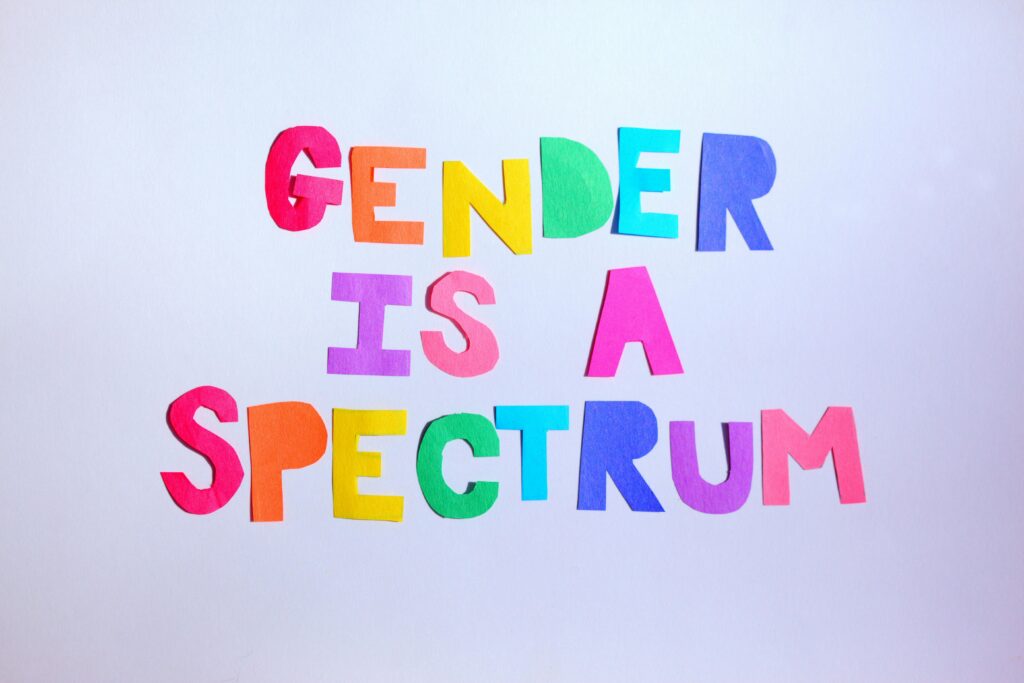
Photo courtesy of Katie Rainbow
Gender was being redefined—contrary to past fancies of “What are little boys are made of: snips, snails, and puppy-dogs' tails” and “What are little girls are made of: sugar and spice and everything nice.”
“This idea [that gender is assigned at birth],” points out Durham University’s Linda Arrighi, PhD, “completely excludes the possibility that our sociocultural environment can have any effect on our concept of self. Recent research has instead challenged the binary notions of sex and gender—highlighting how they oversimplify reality, are exclusionary, and have remarkable economic costs for our society.” To be scientifically accurate, gender is “better conceptualized as a spectrum comprising several traits rather than a series of discrete and countable categories.”[8] (That’s right: a spectrum!)
Furthermore, individuals on the gender spectrum can be considered gender fluid if their thinking about their own identity is flexible. Board-certified psychiatrist Margaret Seide, MD, defines the term further in an interview for verywellmind.com: “Being gender fluid means that you don’t have a set gender or set place on the gender spectrum.”[9]
“While researchers are still looking into this,” points out former development director Savana Beal in her article for the Comprehensive Therapy Center in Michigan, “studies have shown that, when compared to neurotypical people, individuals with conditions such as ADHD and autism spectrum disorder especially are more likely to report being attracted to people of the same gender and/or to identify as transgender or gender non-conforming.
“This doesn’t mean that being neurodivergent causes somebody to be gay or the other way around.
“However, it’s important to recognize that this population does exist and that they have a unique perspective to bring to the table.”[10]
So, now the question begs: What happens to the individuals on the autism–gender spectrums when they are not brought to the proverbial table?
Acknowledging autistic–gender-diverse individuals
“From an early age,” notes Violet Lhant, a writer and content manager for the Human Rights Campaign Foundation, “people around us tend to notice our differences before we even have the words to describe ourselves. Before learning the expectations of a neurotypical, cisgender, and heteronormative society, the natural behavior of LGBTQ+ and autistic children is frequently…unusual and, unfortunately, [considered] deviant.
“When I look back on my life, a narrative emerges of continuously clawing my way out of a pit of conformity. At the same time, teachers punished me for autistic behavior, and bullies in the schoolyard hurled out homophobic slurs….”[11]
“Family and societal rejection of a person’s gender identity are strong predictors of mental health difficulties among people who are transgender.” Their struggle with the incongruence between self and society can lead to very real psychological distress. The American Psychiatric Association’s Diagnostic and Statistical Manual of Mental Disorders (DSM-5-TR) calls it “gender dysphoria.” It can begin with stigmatization and discrimination and lead to a negative self-image and a higher rate of other mental health disorders, such as anxiety and depression. And the odds of gender-diverse adults committing suicide are much greater than for adults in the cisgender population.[12]
Acknowledging curiosity about sex
Most people would agree: Being heard, understood, and accepted in society are essential human needs, so anyone who struggles with communication and social skills also struggles with being heard, understood, and accepted. Mix in sensory sensitivities, and adolescents or young adults who are autistic may become confused, frustrated, or isolated while trying to navigate sex.[13]
“Children on the spectrum who haven’t been taught social skills will not understand social rules,” explains sexologist Isabelle Hénault, PhD, in her webinar for Autism Ontario, Autism Sexuality and the Law. “Their reality is not the same as that for a neurotypical who can grasp the unspoken rules of sex—and most adolescents misunderstand sex anyway.”[13]
Photo courtesy of Atlantic Ambience
Hénault provides an example: A perfectly natural impulse occurs at a perfectly inappropriate time. When the adolescent also has a poor understanding of consequences, a social dilemma ensues.[13]
Consequences can mean anything from a puzzling slap on the wrist to jail time. “Sometimes a punishment will have some immediate effect on behavior but can have long-term detrimental results,” writes Peter Williamson, PhD, in his book Good Kids, Bad Behavior: Helping Children Learn Self-Discipline. “In clinical experience, this seems to be…true [more often] in the case of anxious, introverted children.” So, a punishment for a perfectly natural impulse may cause kids to become “more self-critical, more pain-sensitive, and more pessimistic about uncertain situations. They are also very susceptible to the effects of punishment….[14]
“Another problem that may arise,” adds Williamson, “is called behavioral rigidity…. Some children who experience inconsistent, extremely harsh punishment for normal sexual self-exploration can develop an aversion to all forms of sexual behavior, even when such behavior is appropriate. These children may grow up having a difficult time establishing normal interpersonal relationships with a person of the opposite sex. This can lead to difficulties in intimacy.”[14]
And what if the sexual behavior is considered inappropriate or illegal? “Teens with autism spectrum disorder often exhibit sexual behaviors in public that are disturbing to parents, teachers, and peers,” writes Loyal Coshway, MD, with his team in their 2016 Pediatrics report. “Some have proposed that such behaviors can be curtailed with hormonal suppression. There is information on the internet suggesting that such medications work, and some reports in the peer-reviewed medical literature support these claims. Such medications can have serious side effects.”[15] (More information about the serious side effects of medications follows this section.)
Even if engaging in “inappropriate” or “illegal” sexual behavior, individuals on the autism spectrum are not guilty. Why? Because they think differently than neurotypical individuals. It’s known as “neurodivergency,” and it means an autistic’s understanding of what’s going on will not be the same as a neurotypical’s.[20] According to Hénault, autistic individuals may “misread how other people are thinking or feeling about sex or project their own thoughts and thinking on others, so they will misread the situation.”
And that’s because most “autistics think everyone thinks as they do.” So, when curious about sex, many autistic adolescents may do what they think everyone does: They go online and type in the logical word concerning their object of interest, “sex”—which brings up pornography! All because the adolescent doesn’t know the rules of sexual and social behavior—and “there is no set of rules online,” stresses Hénault.[13]
Importantly, as neurodivergents, their “thoughts may be at a different level than other people’s, that is, with a moral judgment. The action may be criminal, but there’s no negative intent. The autism profile is different from that of a predator.”[13]
Henault suggests a more appropriate consequence than punishment, such as a diversion program.[13] (For an overview of Delaware’s School Offense Diversion Program click here.)
Hénault also suggests an education focused on sex education as well as social skills: “Sex education is necessary to protect autistics. The plus side is a healthy balance in a sexual relationship.[13]
To this end, a comprehensive sexuality education (CSE) will “empower children and young people to achieve optimal health (physical as well as psychological), well-being, and dignity,” writes Arwinder Singh, MD, MBBS, with his colleagues in their paper, Beyond the Birds and Bees: Why Comprehensive Sexuality Education Is a Game-Changer for Everyone.
“This includes developing respectful social and sexual relationships, understanding the impact of their choices, and asserting their sexual rights in their lives. CSE emphasizes a positive view of sexuality with fundamental values, including respect, inclusion, non-discrimination, equality, empathy, responsibility, and reciprocity. It also promotes constructive attitudes toward bodies, puberty, relationships, sex, and family life by moving beyond a narrow, ‘just the facts’ approach to sexuality and framing sexuality as a natural part of the human body.”[16]
Without appropriate social skills and sexual knowledge, adds Hénault, a child could turn to “modeling or imitating bad behavior; choosing an inappropriate partner; and experiencing emotional extremes, a history of abuse, and the negative side effects of medication.”[13]
Acknowledging medication’s negative side effects
Autism
Although no medication will cure autism, some medications can help treat some symptoms.[17] But as noted on the Autism Research Institute (ARI) website, “not all treatments are created equal; most commonly prescribed drugs have side effects that range from minor to severe to potentially fatal.”[18]
- For ARI’s full list of adverse reactions to prescriptions or over-the-counter medications, click here.
- For the Mayo Clinic’s explanation about which antidepressants cause the fewest sexual side effects, click here.
- The Child Mind Institute addresses medicating for behavior management as well as the process for finding the right medication for an individual. For details, click here.
- Autism Speaks also provides information on the side effects of behavioral medication: click here.
- And antipsychotic medications are covered by the Cleveland Clinic: click here.
Photo courtesy of Cottonbro Studio
Gender-diverse
“Hormone therapy (testosterone or estrogen treatment) is part of the standard of gender-affirming medical care, yet clinical pharmacological knowledge in transgender medicine is lacking.”[19] These five resources are offered to support an educated choice.
- For the Mayo Clinic’s overview of the gender dysphoria diagnosis and treatment, click here.
- Puberty blockers are also covered by the Mayo Clinic staff: click here.
- Plus feminizing hormone therapy: click here.
- And masculinizing hormone therapy: click here.
- For Johns Hopkins Medicine’s overview of gender-affirming hormone therapy, click here.
NOTE: All information provided or published by Autism Delaware is for informational purposes only. Reference to any treatment or therapy option or to any program, service, or treatment provider is not an endorsement by Autism Delaware. You should investigate alternatives that may be more appropriate for a specific individual.
Cited references
1 Vrangalova, Zhana, PhD. 2017. There’s Growing Evidence For A Link Between Gender Dysphoria And Autism Spectrum Disorders. Forbes website. https://www.forbes.com/sites/zhanavrangalova/2017/11/15/growing-evidence-for-a-link-between-gender-dysphoria-and-autism-spectrum-disorders/.
2 Mittertreiner, E.J.E., et al. 2024. Research methods at the intersection of gender diversity and autism: A scoping review. Autism 28(12): 2953–2969. https://pmc.ncbi.nlm.nih.gov/articles/PMC11575102/.
3 Strang, J.F., PsyD., et al. 2014. Increased gender variance in autism spectrum disorders and attention deficit hyperactivity disorder. Archives of Sexual Behavior 43(8): 1525–33. https://www.researchgate.net/publication/260718405_Increased_Gender_Variance_in_Autism_Spectrum_Disorders_and_Attention_Deficit_Hyperactivity_Disorder.
4 Research & Innovation. Children’s National website. https://research.childrensnational.org/people/john-strang.
5 Warrier, V., et al. 2020. Elevated rates of autism, other neurodevelopmental and psychiatric diagnoses, and autistic traits in transgender and gender-divers individuals. Nature Communications 11(3959). https://www.nature.com/articles/s41467-020-17794-1.
6 Huff, C. 2021. Working with adults with developmental disabilities. American Psychological Association website: https://www.apa.org/monitor/2021/11/feature-developmental-disabilities.
7 American Psychological Association. 2021. APA Resolution on Gender Identity Change Efforts (1). https://www.apa.org/about/policy/resolution-gender-identity-change-efforts.pdf.
8 Arrighi, L., PhD. 2025. The Spectrum of Sex and Gender. Archives of Sexual Behavior 54(10): 3785–3791. doi: 10.1007/s10508-025-03331-y. https://pmc.ncbi.nlm.nih.gov/articles/PMC12753565/.
9 Gould, W.R.. Medically reviewed by Rachel Goldman, PhD, FTOS. What Does It Mean to Be Gender Fluid? verywellmind website: https://www.verywellmind.com/what-is-gender-fluid-5075600.
10 Beal, S. 2021. Brainbows: Proud to Be LGBT and Neurodivergent. Comprehensive Therapy Center website: https://therapycenter.org/brainbows-proud-to-be-lgbt-and-neurodivergent/.
11 Lhant, V. 2022. Celebrating Autism Acceptance Month as a Member of the LGBTQ+ Community. Human Rights Campaign website: https://www.hrc.org/news/celebrating-autism-acceptance-month-as-a-member-of-the-lgbtq-community.
12 What is Gender Dysphoria? American Psychiatric Association website: https://www.psychiatry.org/patients-families/gender-dysphoria/what-is-gender-dysphoria.
13 Hénault, I., PhD. 2023. Autism Spectrum, Sexuality and the Law. AutismOntario webinar on youtube: https://www.youtube.com/watch?v=8GP2ojNb0Jw.
14 Williamson, P., PhD. 1991. Good Kids, Bad Behavior: Helping Children Learn Self-Discipline. Fireside Simon & Schuster: 93.
15 Coshway, L., MD., et al. 2016. Medical Therapy for Inappropriate Sexual Behaviors in a Teen With Autism Spectrum Disorder. American Academy of Pediatrics Publications 137(4). https://publications.aap.org/pediatrics/article-abstract/137/4/e20154366/81484/Medical-Therapy-for-Inappropriate-Sexual-Behaviors?redirectedFrom=fulltext.
16 Singh, A., MD, MBBS, et al. 2025. Beyond the Birds and Bees: Why Comprehensive Sexuality Education Is a Game-Changer for Everyone. Cureus 17(8): e89479. doi: 10.7759/cureus.89479. https://pmc.ncbi.nlm.nih.gov/articles/PMC12413916/.
17 Medication Treatment for Autism. 2021. Eunice Kennedy Shriver National Institute of Child Health and Human Development website. https://www.nichd.nih.gov/health/topics/autism/conditioninfo/treatments/medication-treatment.
18 Adverse Drug & Supplement Reactions. 2025. Autism Research Institute website. https://autism.org/adverse-drug-reactions/.
19 Coig, R., PhD, et al. 2023. Clinical pharmacological considerations in transgender medicine. Handbook of Experimental Pharmacology 282: 41–55. https://pmc.ncbi.nlm.nih.gov/articles/PMC11162826/.
20 Neurodivergent. 2026. Cleveland Clinic website. https://my.clevelandclinic.org/health/symptoms/23154-neurodivergent.
About the author
Carla Koss has more than 30 years’ experience researching, writing, and editing articles relevant to the disabilities community in Delaware. She is also a two-time recipient of the First State Award for Writing for her work with the Delaware Chapter of the National MS Society and the University of Delaware’s Center for Disabilities Studies. As Autism Delaware’s content strategist–writer, Carla now serves as the managing editor of the e-SUN’s monthly cover stories.